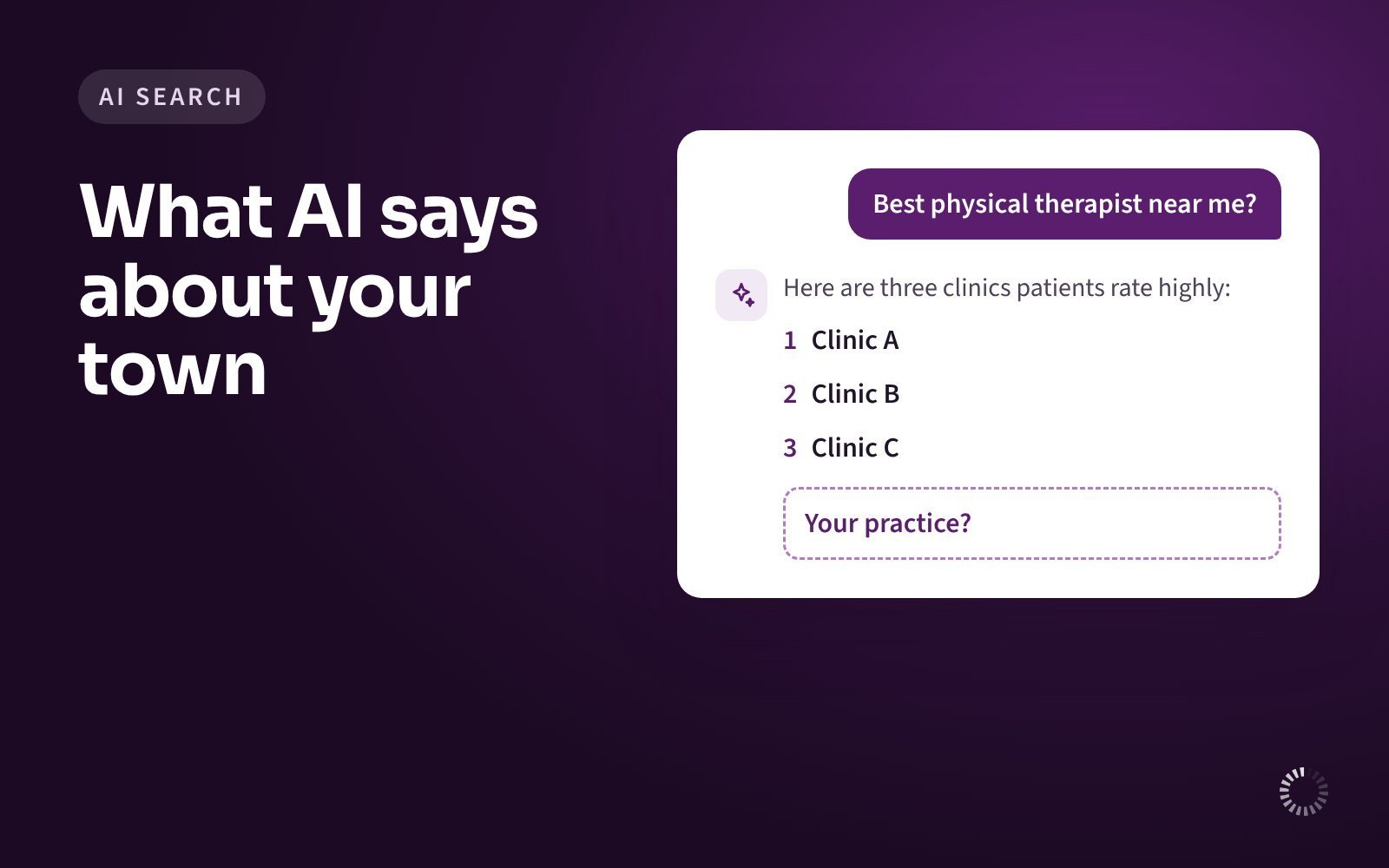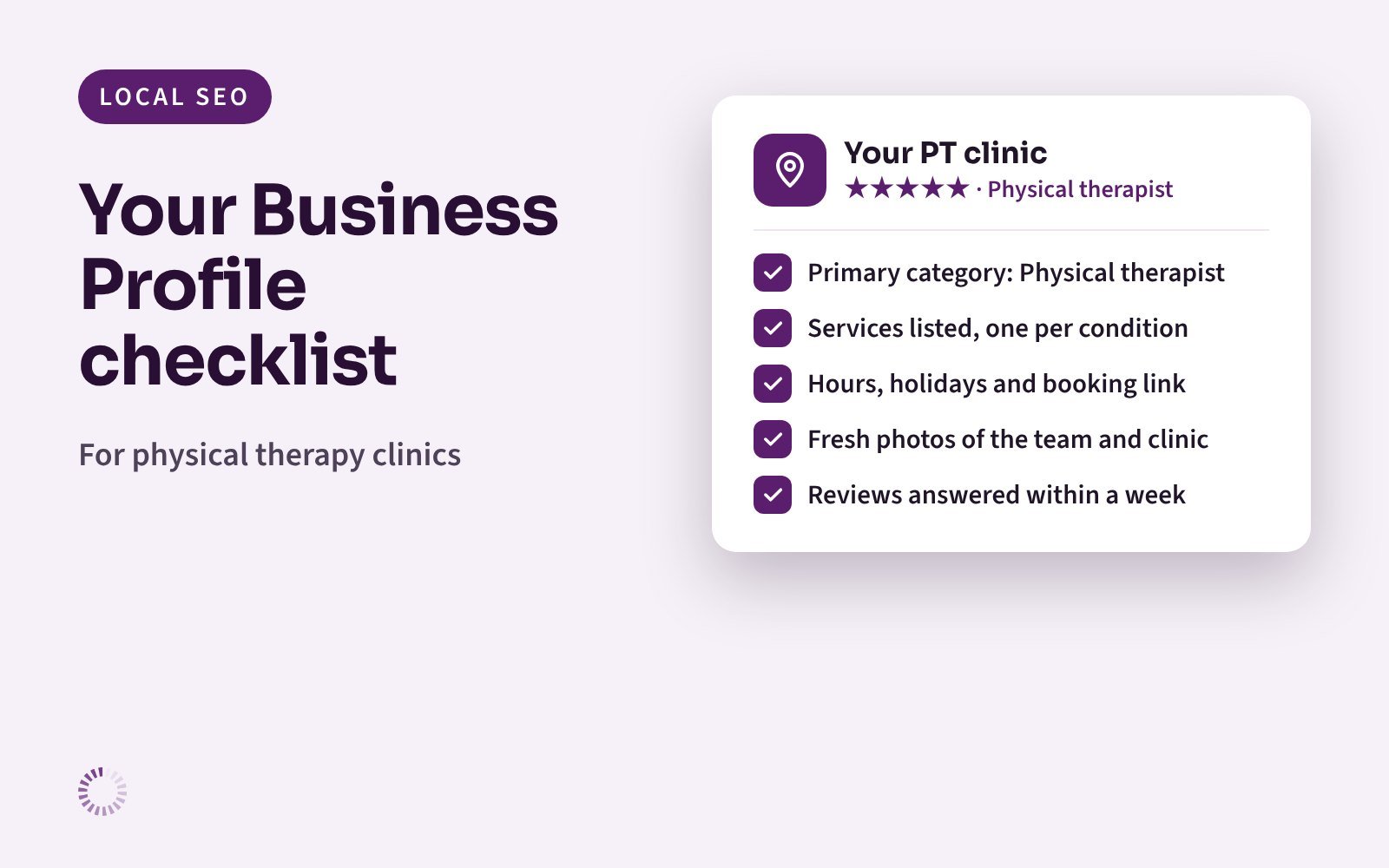
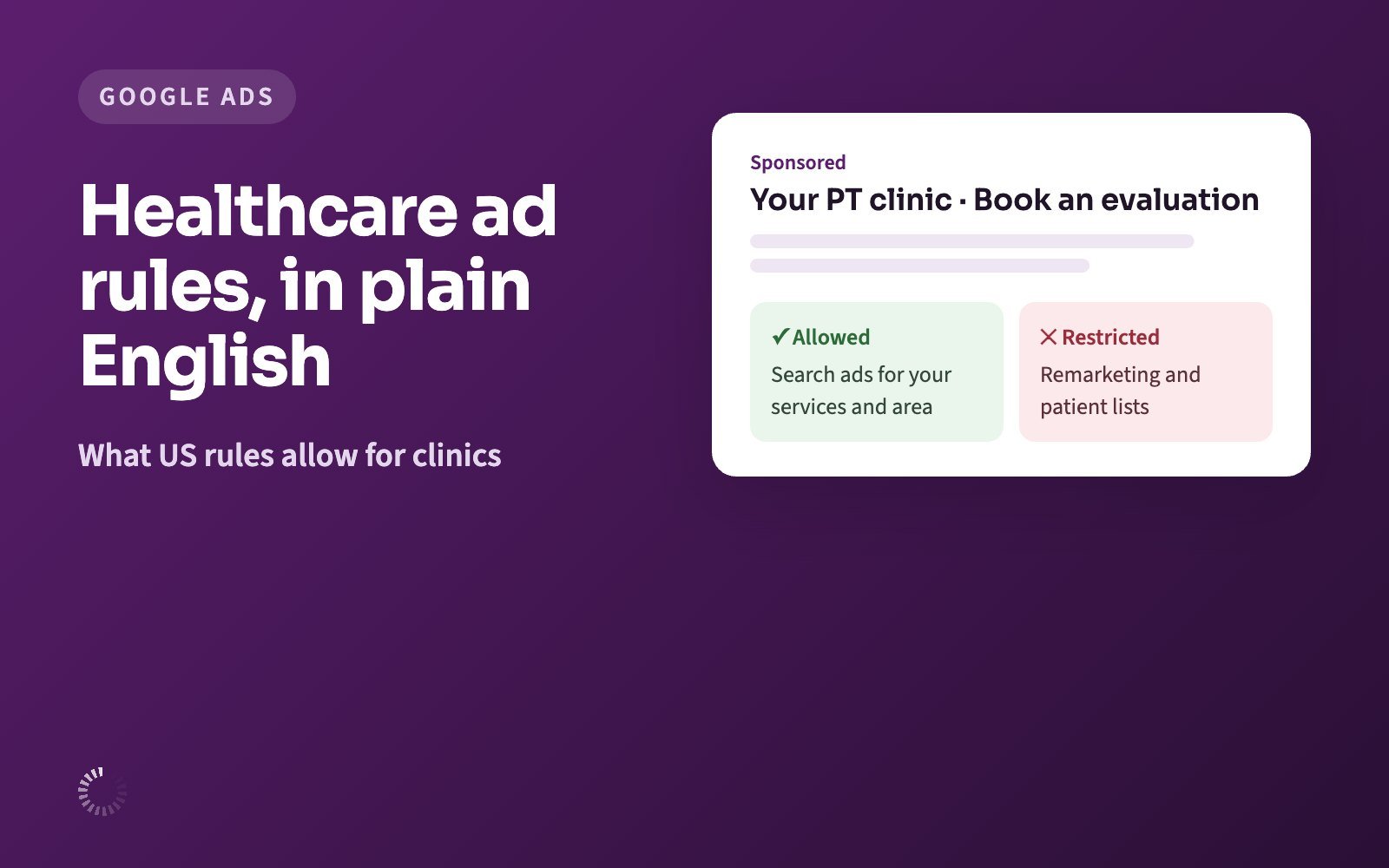
Many clinic owners assume Google Ads is off limits for healthcare, or that one wrong word will get the account suspended. Neither is true. A US physical therapy clinic can run search ads for its services in its own area. The rules mainly limit three things: what you claim, who you target, and what data your website sends to Google.
This guide explains each one in plain English, with examples, so you can brief your team or your agency with confidence.
What Google allows for a physical therapy clinic
Google’s healthcare and medicines policy is mostly about specific high-risk areas: prescription drugs, online pharmacies, addiction treatment services, health insurance, and speculative or experimental treatments. Ordinary physical therapy services are not on those lists.
In practice, that means a clinic can usually:
- Show search ads when people search for things like “physical therapy near me” or “knee pain physical therapist [town]”.
- Target the towns and ZIP codes around each clinic.
- Describe your services, insurance accepted, opening hours and how to book.
- Send people to a page on your website where they can call or request an appointment.
Areas that need extra care
A few services that some clinics offer fall under Google’s restricted categories:
- Experimental treatments. Google restricts ads for speculative or experimental medical treatments. Cell and gene therapies, such as stem cell injections, are restricted unless they are FDA-approved and promoted by the provider that holds the license.
- Prescription drugs. Do not name prescription medicines in your ads.
- Addiction and recovery services. These require certification before you can advertise them.
- Health insurance. Advertising insurance coverage itself (not simply “we accept most insurance”) requires certification in the US.
If your clinic offers any of these, check Google’s policy page before you write the ad.
Rule 1: what you claim
Google’s misrepresentation policy does not allow claims that present an improbable result as the likely outcome, even if that result is possible. The US Federal Trade Commission’s health guidance goes further: health benefit claims in advertising must be backed by competent and reliable scientific evidence.
For a clinic, the safest approach is to describe what you do and what the patient can expect, rather than promising an outcome.
| Avoid (example) | Safer (example) |
|---|---|
| “Cure your back pain in 3 sessions” | “Back pain physical therapy. Same-week appointments” |
| “Guaranteed pain-free in 2 weeks” | “One-to-one care with a licensed physical therapist” |
| “Avoid surgery for good” | “Personalized treatment plans for knee pain” |
| “The best PT in the state” | “Rated 4.8 by our patients on Google” (only if true and current) |
Testimonials and reviews in ads. Since October 2024, the FTC’s rule on reviews and testimonials bans fake reviews, buying reviews that express a particular opinion, and testimonials from insiders without clearly stating the connection. Only quote real patients, with their permission, and do not edit their words into a claim they did not make.
Rule 2: who you target
This rule shapes how a clinic’s campaigns are built. Google treats health as a sensitive category in its personalized advertising policy. For health-related ads, Google does not support advertiser-made audiences, which means you cannot use:
- Remarketing (showing ads to people because they visited your website).
- Customer Match (uploading your patient list or email list).
- Lookalike audiences and audience expansion built from those lists.
Google’s own ready-made audiences, such as location, demographics and in-market segments, are still available, because Google builds them without sensitive health signals. Google also states that people under 18 are not eligible for personalized advertising of any kind.
What this means in practice: build your campaigns around search terms and location. Someone typing “physical therapy for knee pain near me” is telling you exactly what they need, and you can reach them without any audience list. Never upload a patient list to Google Ads, even if your old agency used to.
Rule 3: what your website sends to Google
To measure results, Google Ads uses a tag (a small piece of code) on your website. As a healthcare provider covered by HIPAA, you need to be careful about what that tag can see.
The US Department of Health and Human Services (HHS) issued guidance on online tracking technologies for HIPAA-covered providers. In June 2024, a federal court in Texas (American Hospital Association v. Becerra) vacated one part of that guidance: the part saying that an IP address combined with a visit to a public page about a health condition counts as protected health information. HHS filed an appeal and then withdrew it in August 2024. The rest of the guidance remains, including the position that tracking on logged-in pages, such as patient portals, needs a HIPAA business associate agreement with the vendor.
Practical steps:
- Do not place Google tags on your patient portal or any logged-in page.
- Do not send form contents (symptoms, conditions, insurance details) to Google. Count that a form was submitted, not what was written in it.
- Keep your appointment request form short. Ask for health details later, through your secure intake system.
- Track phone calls as a simple count of calls from ads.
- Ask your compliance lead or lawyer to review your tracking setup.
A simple compliant setup for a clinic
- One search campaign per clinic location, targeted to the area patients actually travel from.
- Ad groups by service (back pain, knee pain, sports injuries, post-surgery rehab), each sending people to the matching page on your website.
- Ad text that describes services, insurance, availability and booking, without outcome promises.
- No remarketing, Customer Match or lookalike audiences.
- Conversion tracking that counts calls and form submissions, with no health details.
- A monthly review of search terms, cost per new patient enquiry and any policy warnings in the account.
Want a second opinion on your ads?
We run Google Ads for US physical therapy clinics. If you would like us to look over your current account for policy and tracking risks, get in touch.
Sources
- Google Ads Help: Healthcare and medicines policy
- Google Ads Help: Personalized advertising policy
- Google Ads Help: Misrepresentation policy
- Covington: FTC issues Health Products Compliance Guidance (20 December 2022)
- Davis Wright Tremaine: FTC finalizes rule banning fake consumer reviews (effective 13 October 2024)
- Morrison Foerster: Federal judge vacates portions of OCR guidance on online tracking technologies (June 2024)
- HIPAA Journal: OCR appeal of the AHA tracking technology ruling, and its withdrawal (29 August 2024)
This article is general information, not legal advice. Google’s policies change, so check the policy pages above before launching a campaign.
Written by the Outreach Digital team.
← All articles